
Lost your SIM card on your iPhone? Don’t worry, you’re not alone! It’s like playing hide and seek with a tiny piece of plastic that holds your digital life together. One moment it’s there, and the next it’s vanished into the abyss of your phone.
Understanding SIM Card Locations
Finding a SIM card on an iPhone can be straightforward once the details are understood. Knowing what a SIM card is and why it matters enhances the search process.
What is a SIM Card?
A SIM card, short for Subscriber Identity Module, is a small, removable chip crucial for mobile devices. This chip stores essential information such as phone numbers and network details. Mobile carriers provide SIM cards in various sizes, including nano-SIM, which modern iPhones use. Each card allows users to connect to cellular networks, facilitating calls, texts, and mobile data usage. Missing this small component impacts device functionality significantly.
Importance of SIM Cards in iPhones
SIM cards play a pivotal role in iPhones. They enable communication by linking the phone to the mobile network. Users rely on them for seamless access to voice services, messaging, and internet connectivity. Additionally, SIM cards store contact information and provide security features, like unlocking the device. When switching phones or carriers, the SIM card often needs to be removed and reinserted. Most importantly, without a functioning SIM card, many core functionalities become unavailable.
Locating the SIM Card Slot
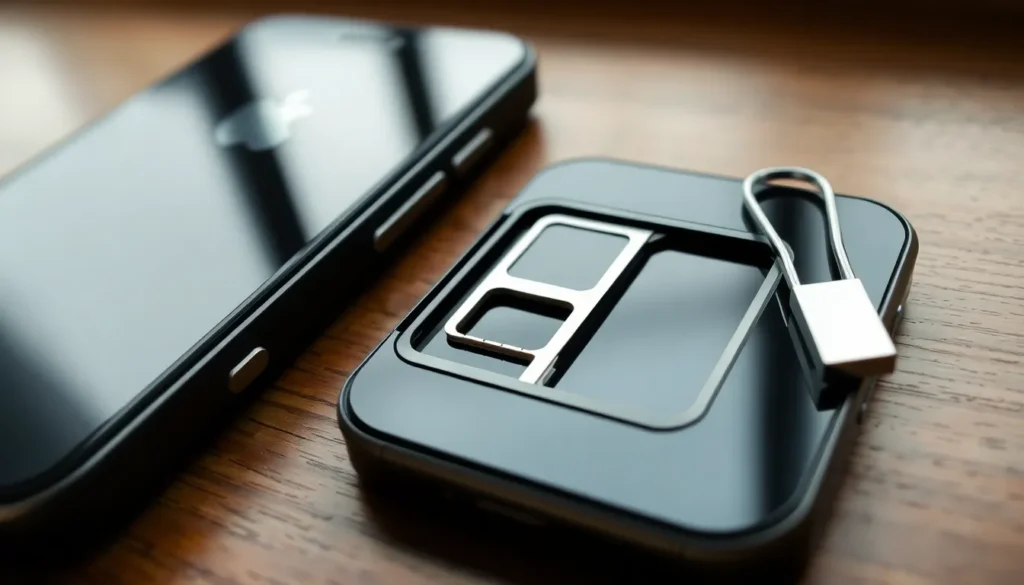
Locating the SIM card slot on an iPhone is essential for handling network connectivity. Knowing the model helps identify the exact placement.
Identifying Your iPhone Model
Different iPhone models feature varying SIM card slot locations. Users can find iPhone model information in the device settings or look for it on the back of the phone. For earlier models like the iPhone 4 and 5, the SIM card slot typically appears on the right side. More recent models, such as the iPhone 6 through iPhone 14, also place the SIM card slot on the same side but may differ slightly in size or design. Checking Apple’s official website clarifies any uncertainties about which model one is using.
Finding the SIM Card Tray
Finding the SIM card tray requires a few simple steps. First, users should examine the side of the iPhone, specifically the right-hand side. A small oval or rectangular pinhole indicates the tray’s location. Apple provides a SIM eject tool with each device, making it easier to access the tray. Alternatively, a small paperclip serves as an acceptable eject tool if misplaced. After inserting the tool into the hole, gentle pressure pops the tray out. Users should then retrieve the SIM card from the tray for any necessary replacements or adjustments.
Common Issues with SIM Cards
Several issues can arise with SIM cards, affecting connectivity. Users frequently experience a SIM card not detected error, which indicates that the iPhone can’t recognize the SIM card. This situation may occur due to improper placement, SIM card damages, or conflicts with the network. Restarting the device often resolves the issue, but if it persists, considering the possibility of a defective SIM card is essential.
SIM Card Not Detected
When an iPhone fails to detect a SIM card, checking the physical placement becomes crucial. Ensuring the SIM card is securely positioned in its tray can eliminate recognition problems. Reinsert the card and make sure it aligns correctly before closing the tray. If that doesn’t help, examining the card for scratches or dents is vital, as any damage can cause operational issues. Switching to another device for testing can determine if the problem lies with the SIM card or the iPhone.
Troubleshooting SIM Card Problems
Identifying and resolving SIM card issues involves straightforward troubleshooting steps. First, restart the iPhone to refresh its system. If the problem continues, users can navigate to the settings and check for software updates, as an outdated operating system might contribute to the issue. Resetting the network settings often helps as well; this action can restore connection configurations without affecting personal data. Users may also consider contacting their carrier for support, as network settings can also lead to SIM card acceptance problems.
Replacing or Removing a SIM Card
Replacing or removing a SIM card from an iPhone is a straightforward process. Understanding these steps ensures that users maintain proper device functionality.
Steps to Safely Remove a SIM Card
To begin, gather the necessary tools, such as the SIM eject tool provided by Apple. Locate the small pinhole on the right side of the iPhone; this indicates the SIM card tray’s position. After inserting the tool into the pinhole, apply gentle pressure until the tray pops out. Next, grasp the tray and pull it out fully. Handle the SIM card carefully, avoiding contact with metal components to prevent damage. Always store the SIM card in a safe place once removed.
How to Insert a New SIM Card
Inserting a new SIM card requires attention to detail. Start by ensuring the SIM card aligns correctly within the tray, matching the tray’s small notch. Once in place, insert the tray back into the iPhone with the SIM card facing the correct direction. After the tray is pushed in securely, wait for the device to recognize the new SIM card. If prompted, follow any on-screen instructions to complete the setup. Always check for signal reception to confirm successful installation.
Finding a SIM card on an iPhone can be a straightforward task with the right guidance. Understanding the specific location of the SIM card slot for each iPhone model is essential for accessing this crucial component. Whether it’s retrieving a misplaced SIM card or addressing issues like “SIM card not detected,” users can effectively troubleshoot and resolve problems with ease.
By familiarizing themselves with the SIM card’s role in their device, users can appreciate its importance in maintaining connectivity. With the proper tools and steps outlined, anyone can confidently manage their SIM card needs and ensure their iPhone remains fully functional.