When a toddler’s chatter sounds more like a secret code than a conversation, it can leave parents scratching their heads. Speech delays can be as puzzling as trying to find a sock in a laundry basket—frustrating and confusing. But fear not! With the right tips and tricks, parents can help their little ones find their voice and turn those babbles into beautiful sentences.
Understanding Speech Delay
Speech delay occurs when a child struggles to meet expected language milestones. This can lead to challenges in communication, impacting social interactions and learning.
What Is Speech Delay?
Speech delay refers to a significant lag in a child’s ability to produce or understand spoken language compared to peers. Children might not use age-appropriate vocabulary, struggle with sentence structure, or have difficulty articulating words correctly. Parents often notice these delays when their child is younger than 2 years old. Identifying speech delay early increases the chance of effective intervention.
Common Causes of Speech Delay
Various factors contribute to speech delay, including developmental delays, hearing impairments, and environmental influences. Children with a family history of language disorders may be at higher risk. Additionally, exposure to multiple languages might confuse some children, leading to temporary delays. Socioeconomic factors can also play a role, as limited access to resources may hinder language development.
Effective Speech Delay Tips
Applying effective strategies can significantly aid children facing speech delays. Below are several approaches parents can utilize to foster better communication skills.
Encourage Communication
Encouraging communication starts with simple interactions. Engage in conversations, even if responses are limited, to stimulate language use. Offer choices during activities to prompt verbal responses. Show enthusiasm for any attempt at speech, reinforcing the effort. Use open-ended questions to encourage thoughtful answers.
Create a Language-Rich Environment
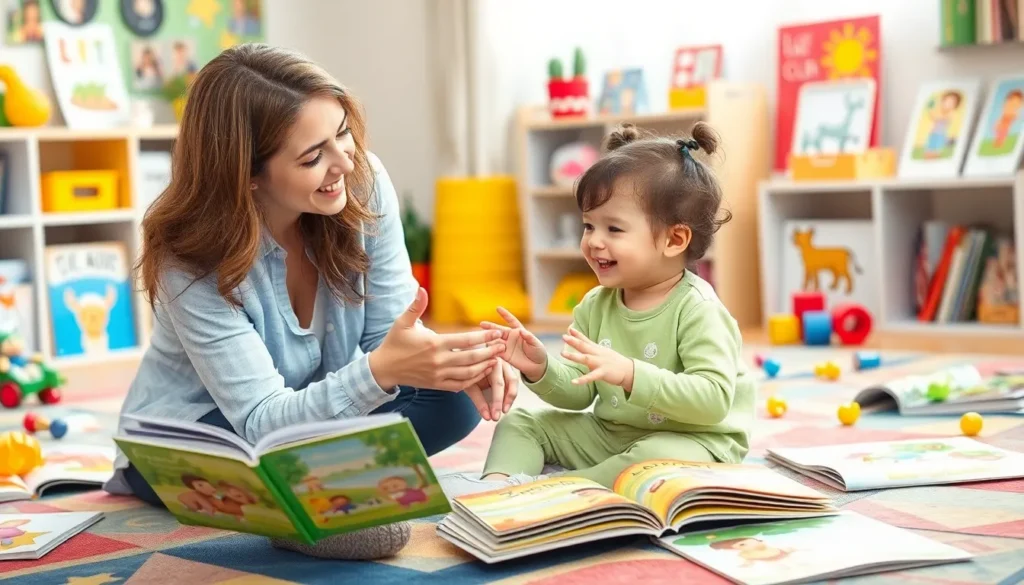
Creating a language-rich environment involves surrounding children with spoken language. Read books aloud regularly, introducing new vocabulary along with engaging stories. Label objects around the home to enhance word recognition. Play audio stories and nursery rhymes to expose children to varied language rhythms and structures. Provide opportunities for social interaction with peers to facilitate conversational skills.
Use Visual Aids and Sign Language
Using visual aids and sign language can enhance understanding and communication. Displaying pictures or symbols can clarify words and concepts for children. Teaching basic signs can help them express needs before they develop speech skills. Incorporating gestures while speaking reinforces meaning and captures attention. Combining spoken language with visual support promotes a better grasp of communication.
Activities to Support Speech Development
Engaging in specific activities boosts speech development in young children. These methods can help children with speech delays improve their language skills in enjoyable and interactive ways.
Storytime and Reading Together
Reading together enhances vocabulary and comprehension skills. Choose age-appropriate books that capture children’s interest and encourage them to point at pictures while naming objects. Engage children by asking questions about the story and prompting them to predict what happens next. Repetition of familiar stories aids in memory retention and allows children to practice language skills in context. Utilize expressive voices and gestures to make the experience interactive and entertaining.
Singing and Rhyming Games
Singing songs and playing rhyming games strengthen phonetic awareness. Popular children’s songs, like “Itsy Bitsy Spider,” incorporate repetitive phrases that encourage participation. Introduce simple melodies that have catchy tunes, inviting children to sing along. Rhyming games, such as nursery rhymes, help clarify sounds and promote speech patterns. Use hand movements or instruments to reinforce the rhythm, making learning fun and engaging.
Interactive Play and Role Play
Interactive and role play create opportunities for language use in everyday contexts. Toys that stimulate imaginative scenarios, like dolls or action figures, facilitate conversations between characters. Encourage children to describe their actions or express feelings during playtime. Set up real-life situations, such as pretend grocery shopping, which prompts children to practice language skills. Prompt questions during these activities, fostering communication and enhancing vocabulary through interactive scenarios.
When to Seek Professional Help
Identifying the right time to seek professional help for speech delays is crucial. Parents should look for specific signs that indicate a child’s need for support.
Signs That Indicate a Need for Support
Lack of spoken words by 15 months suggests a possibility of delay. Limited use of gestures, such as pointing or waving, by 12 months may raise concern. Inability to form two-word phrases by the age of 24 months warrants attention. Difficulty understanding simple instructions at any age could indicate a need for evaluation. If a child often experiences frustration due to communication challenges, seeking professional insight proves beneficial. Colleagues and holistic assessments can guide parents in addressing these issues effectively.
Types of Professionals to Consult
Consulting a pediatrician is often the first step. They can conduct preliminary assessments to identify potential speech delays. Speech-language pathologists specialize in communication disorders and provide targeted interventions. Audiologists assess hearing capability, ruling out related issues that may affect speech. Developmental psychologists can evaluate a child’s overall development, identifying any co-occurring conditions. Ensuring a multidisciplinary approach often leads to more effective strategies for speech development.
Addressing speech delays in toddlers requires patience and creativity. By implementing the strategies outlined in this article parents can create a supportive environment that encourages communication. Engaging in meaningful interactions and providing a language-rich atmosphere can make a significant difference in a child’s speech development.
It’s crucial to recognize the signs that indicate a need for professional support. Early intervention can lead to better outcomes and help children thrive in their communication skills. With the right tools and resources parents can navigate this journey with confidence and foster their child’s ability to express themselves effectively.